Monday, May 20, 2013

Case Presentations

Silver Amalgam Restoration

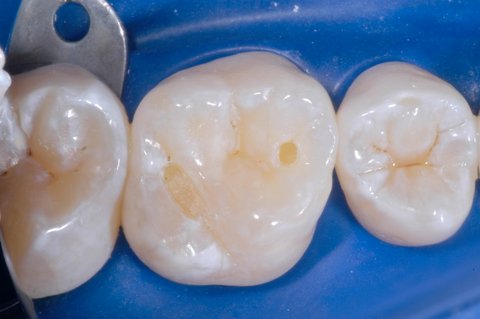
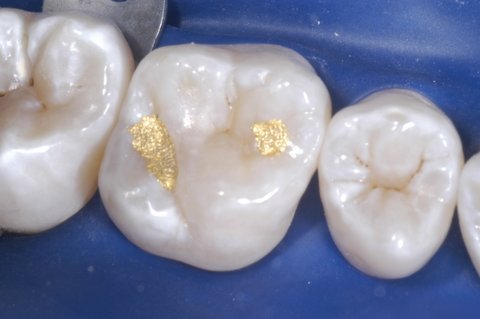
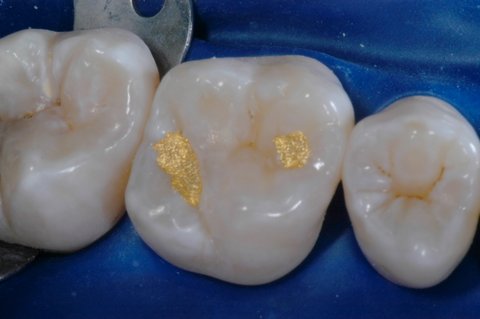
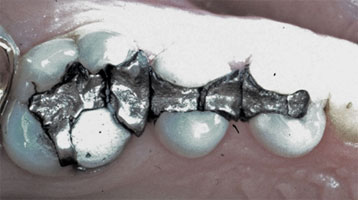
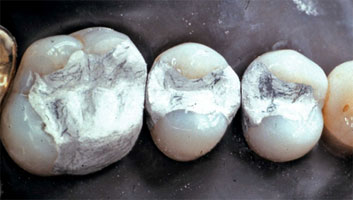
Much of the dentistry that we do is simply to repair or replace previously done dentistry which is no longer serviceable. Here is an example of some old silver amalgam restorations which, as you can see, have fractured.

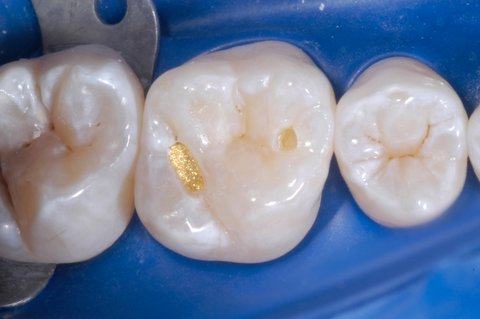
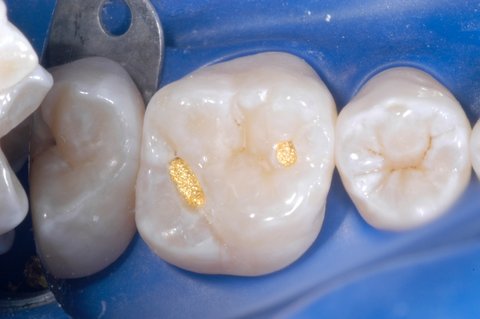
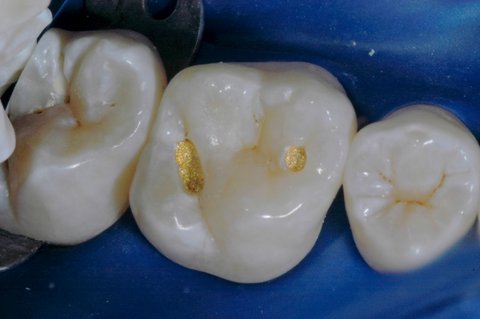
Ideally, these restorations would be best replaced with gold, or a ceramic material, however for economic reasons the patient elected to simply replace them again with amalgam. Although they will likely discolor with time, these new restorations should provide many years of successful function.
Before:
silver amalgam 1

After:
silver amalgam 2

Incidently, the grey background that you see is a rubber dam, which is used to aid in isolation and provide better visibility for the dentist during the restorative procedure. It protects the patient from inadvertant injury from aspiration or swallowing debris or restorative materials.

Severe Decay Restored with Composite Resin Bonding

In many restorative procedures, we are trying to achieve an optimum esthetic result, and therefore must choose materials that are tooth-colored. Our options typically consist of composite resin (plastic) materials, ceramic, or metal reinforced ceramics. This case is an extreme example of severe decay which was restored using composite resin bonding.

This patient's limited resources prevented her from using ceramic crowns which would have been far better from the standpoint of strength, cosmetics, and potential longevity, but the use of composite at least buys her some time until she is able to proceed with a more permanent solution.

Before:
severedecay compositeresin 1

After:
severedecay compositeresin 2

The dark spot on the patient's right lateral incisor is from a metal post placed in the root which was necessary after the tooth had been treated with a root canal filling. As the next case demonstrates, the use of a ceramic restorative material would have prevented this compromise.


Aged & Discolored Restorations with Ceramic Crowns


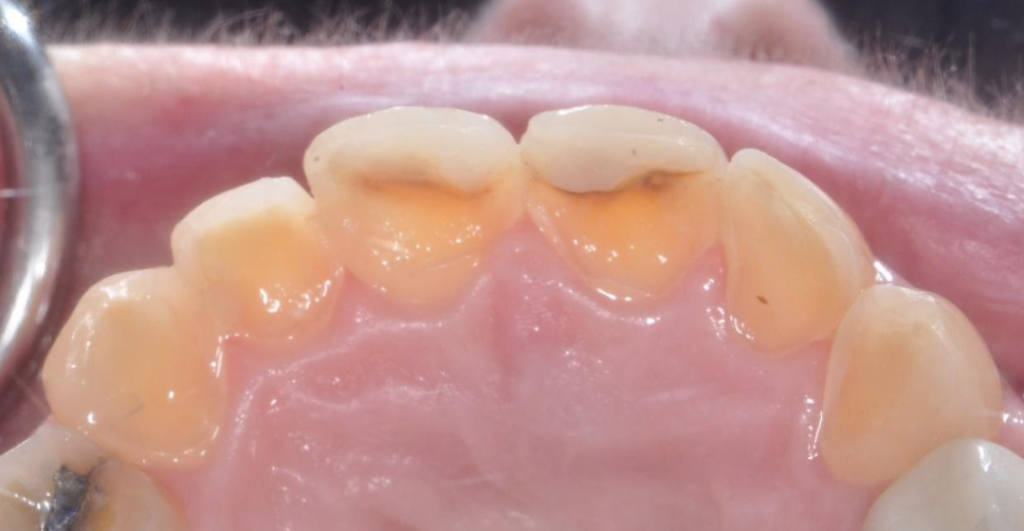
This picture shows several aged and discolored composite restorations. These old fillings are quite large when viewed from the back of the front teeth. A heavy coffee drinker, this patient wished to have a long term solution to the chronic problem of staining which is an inherent weakness in composite technology.

Before:
aged discolored ceramiccrowns 1

After:
aged discolored ceramiccrowns 2

The solution was found in the use of all ceramic crowns, which are extremely resistant to stain and color change.

Notice that we were also able to correct the slight mal-alignment of the lateral incisors. This is one of the great advantages of full coverage crowns.


Realignment

The following case demonstrates the extreme edge of orthodontic correction with restorative dentistry. We can do a certain amount, but beyond that limit it is best to engage the expertise of an orthodontist.

Before:
realignment 1

After:
realignment 2

We were able to accomplish this realignment only because the roots were very nearly in ideal positions. It can be risky to use restorative dentistry to correct severe orthodontic problems. We were fortunate here.


Replacement of Central Incisor

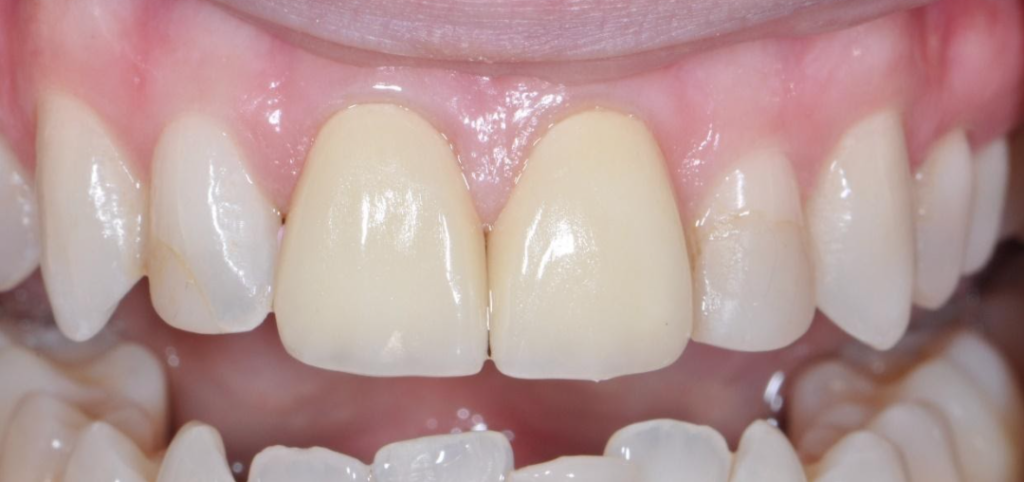
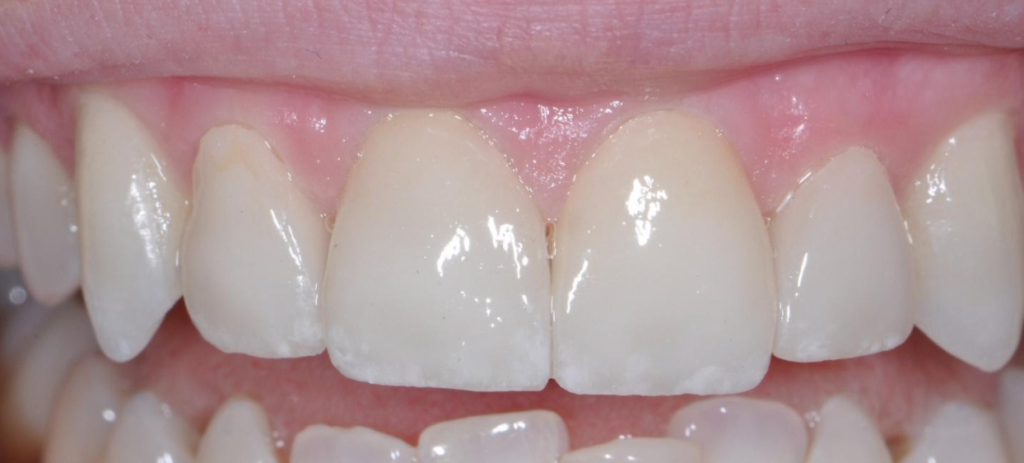
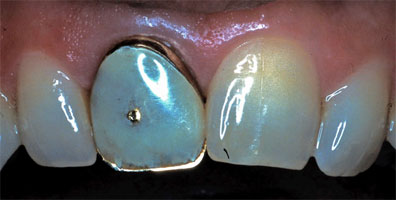
Perhaps the greatest esthetic challenge that any dentist can face is the restoration of a single central incisor. There are so many factors which must be addressed to achieve an acceptable result, including but not limited to shape, color, optical properties of the restorative material, and soft tissue health. This young man had a previously restored central incisor using technology from the 1960's which involved a plastic facing on a gold core. As you can see, the plastic has worn away revealing much of the underlying structure.
Before:
centralincisor 1

After:
centralincisor 2

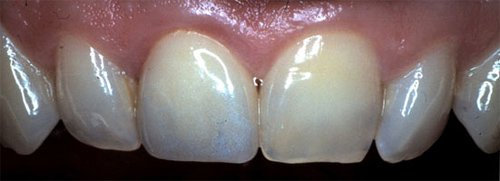
The replacement was done with an all-ceramic material. Note the exact mirror-image of the replacement to the natural incisor. Also note the subtle variety of colors in the natural tooth and the ceramic. Lastly, note the health of the gum around the crown.


Silver Amalgam Fillings Replaced With Cast Gold

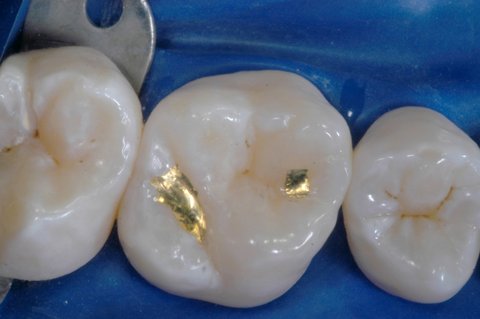
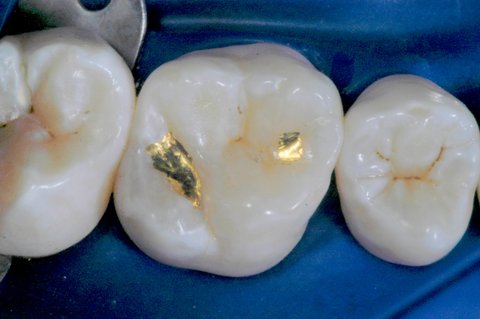
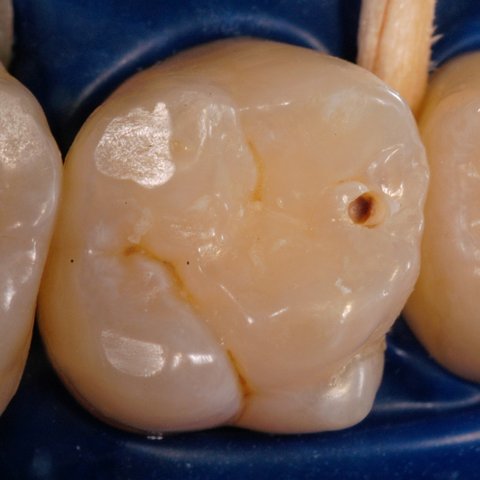
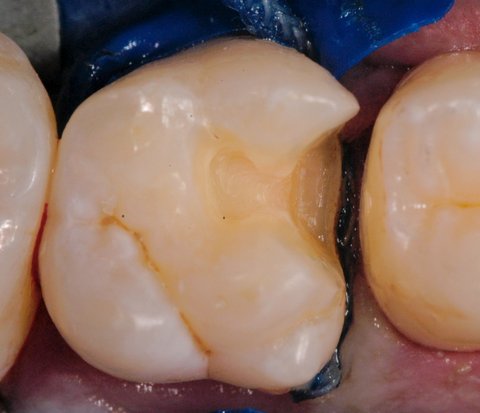
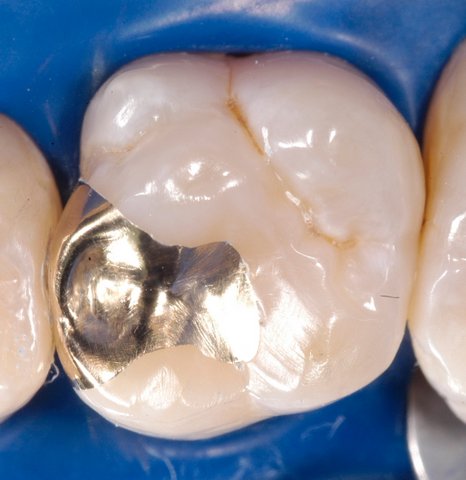
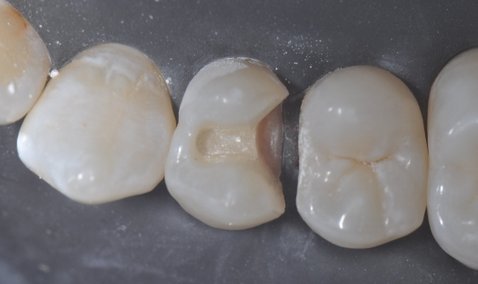
When function and longevity are the primary considerations in replacing previous dentistry, we prefer to use a material that will withstand functional stress. By far, the best material is cast gold. Cast gold never breaks, and its wear characteristics are closer to that of natural teeth than any other restorative material. Hence, gold is ideal when opposing natural dentition. These teeth have old silver amalgam fillings which are beginning to show their age.

 Before:
silver replacedwithgold 1

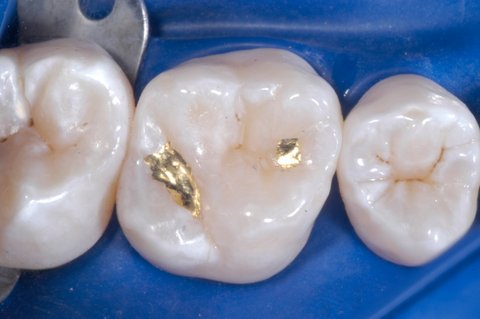
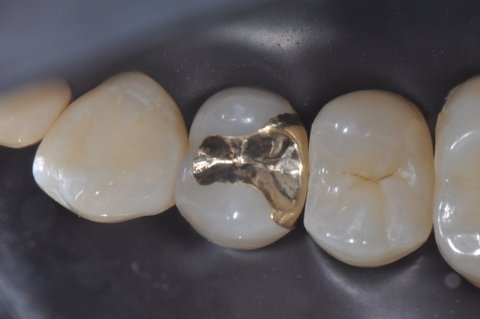
This patient elected to replace these restorations with cast gold. In addition to covering and protecting weak cusps, gold can be finished very precisely to enamel cavity margins to reinforce the natural tooth structure, and minimize further breakdown and leakage. Another advantage is that with gold, the remaining tooth structure doesn't tend to darken as with silver amalgam.

After:
silver replacedwithgold 2

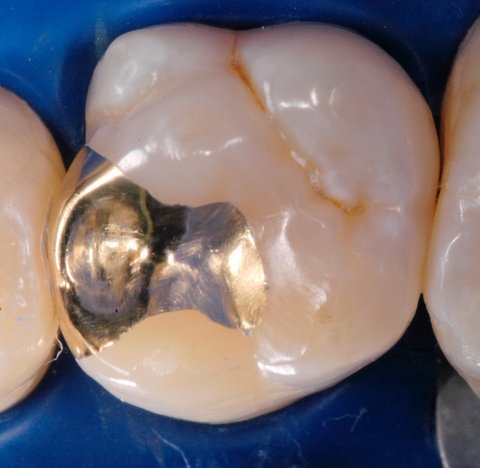
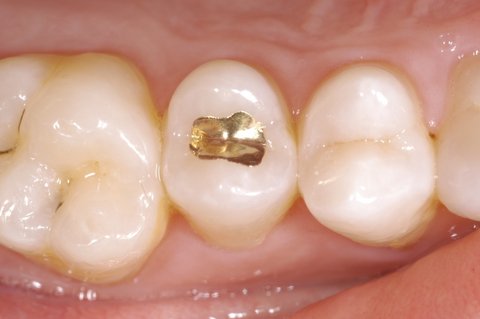
Below is another example of molars reinforced with cast gold. This type of conservative approach allows the cusps to be reinforced to prevent or repair fractures without having to cut away sound tooth structure near the gumline. This is a tremendous help in maintaining periodontal health

 silver replacedwithgold 3

Restoration After Wear and Breakdown of Front Teeth

Unfortunately, wear doesn't always occur just on back teeth. Abrasion and breakdown of the biting edges of the front teeth is also a common problem. Before restoring such cases, it is critical to understand why the breakdown occurred, and to address that cause. In most cases, it is related to the overall bite relationship of the front and back teeth.

 Before:
wear shape restoration 1

After:
wear shape restoration 2

After correcting the bite, the front teeth can be restored to their original length and shape. To ignore the cause would be to condemn the new restorations to failure by either fracture or periodontal breakdown. Notice the customized staining in the porcelain which was done to match this individual's natural teeth. A severe change in color to a shade that is too white would make the restorations appear very unnatural.


Crown Restorations & Corrected Bite Relationship

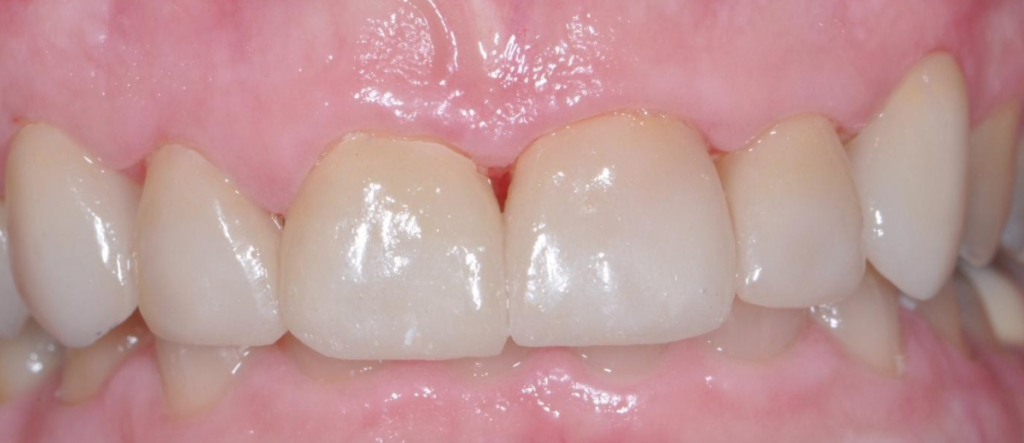
These old crowns were placed in a mouth with a very unstable bite relationship. Notice the subsequent tooth movement which resulted in opening the space between the two front teeth, and the gum recession on the patient's left lateral incisor. These changes are a direct result of uneven bite forces on the restorations.

Before:
bite crowns 1

Here is another pre-operative view of the patient's entire upper arch. Notice how far toward the lip the two right incisors have moved out of alignment. This was a direct result of posterior tooth contacts which deflected the lower jaw forward placing excessive stress on the front teeth.

Before:
bite crowns 2

In order to predictably correct the esthetic dilemma, it is necessary to correct the the bite relationship of the back teeth as well. However, as you can see, the back teeth had huge silver fillings which were best replaced with crowns as well. The next two photos illustrate the final restorations.

After:
bite crowns 3

After:
bite crowns 4

Composite & Color Restorations

The natural teeth were heavily restored with composite, and the crowns previously done were far too white for this particular individual.

Before:
composite color restoration 1

After:
composite color restoration 2

The restoration of the anterior teeth made a tremendous change in this man's appearance. Even the temporary restorations (shown above) made such a difference that he shaved his moustache, which he had previously grown in order to help hide his unsightly teeth.


Correction of Over-eruption & Restoration of Correct Smile Line

Often, patients present with wear and misalignment of the front teeth when back teeth are few, or not present at all. Such cases can be a real restorative challenge in determining how to shape and position the front restorations prior to building the back ones. Notice the drifting, over-erupting, and wear on the front teeth of this middle-aged man who had lost most of his back teeth.

 Before:
wear misalignment 1.jpg

wear misalignment 2

wear misalignment 3

The process of restoring the anterior teeth involves precise determination of the position of the incisal edges for maximum function, esthetics, and comfort.

 wear misalignment 4

wear misalignment 5

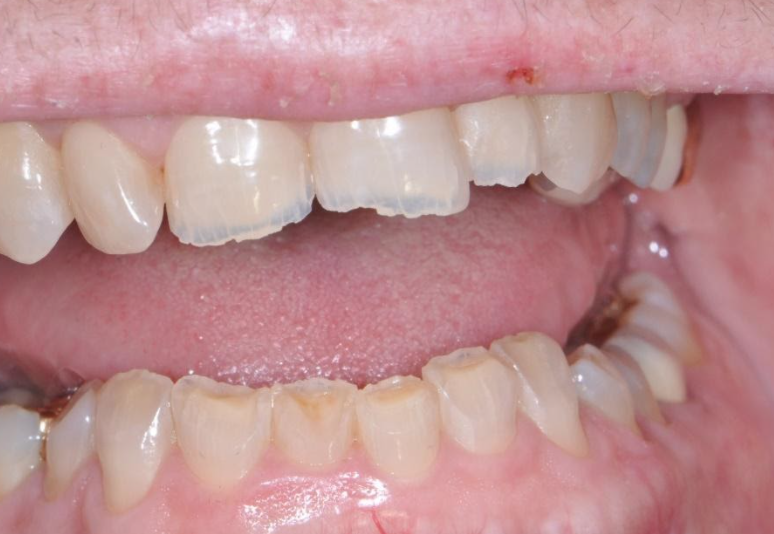
The lateral post-operative view demonstrates the correction of the over-eruption, and the restoration of the correct smile line. Even though the newly restored front teeth are stable, they are still subject to excess forces as a result of the absence of back teeth. At this stage, the patient is ready to be referred to the surgeon for the placement of implants, which will provide the necessary support to prevent overworking of the newly restored front teeth. Although this patient chose to have implants, this objective could also be fulfilled with the use of removable partial dentures.


Trauma Restoration Using Implants

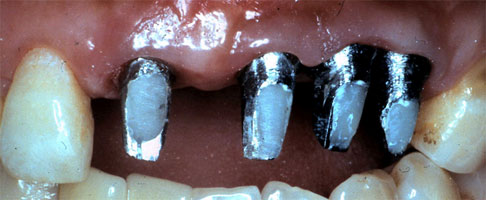
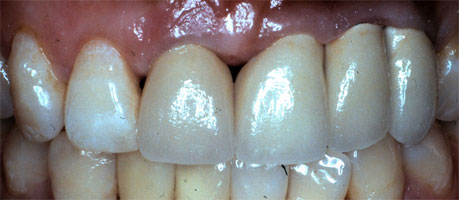
We are sometimes faced with severe esthetic challenges as a result of trauma. This unfortunate young lady was the victim of an auto accident resulting in the loss of four upper front teeth along with a substantial amount of bone.

Before:
trauma 1trauma 2

After:
trauma 3

trauma 4

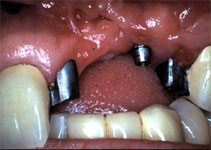
The young man in the following pictures sustained severe bone loss in an accident that his lip line would not adequately hide. Since bone grafting in his case was not predictable, we elected to use tissue-colored porcelain to avoid the necessity for un-naturally long teeth.
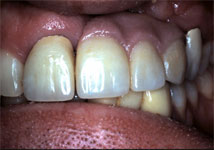
trauma 5trauma 6

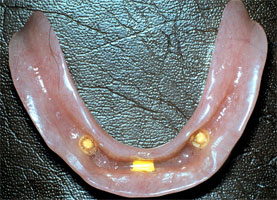
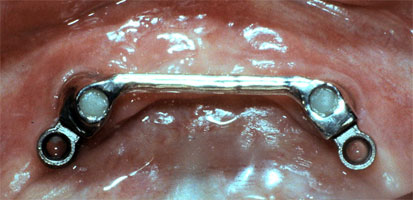
What about the use of implants in patients who are totally edentulous (without any natural teeth)? Depending upon the amount and quality of the remaining bone structure, there are many treatment options available the use of implant technology. The simplest is the use of one two or more implants used to support an "over" denture. The denture is removable, but when in place it is supported by and attached to the implant substructure by simple snap attachments.The first photo shows the implants connceted by a support bar. The second photo shows the inside of the denture which holds the snaps which attach to the bar.
 implant 1

implant 2


Contact Info

Robert H. Bridgeman, DDS
Craig Bridgeman, DMD
2348 NC Hwy 105, Suite 1
Heritage Court
Boone, NC 28607

This e-mail address is being protected from spambots. You need JavaScript enabled to view it.
P (828) 264-7272
F (828) 264-7275